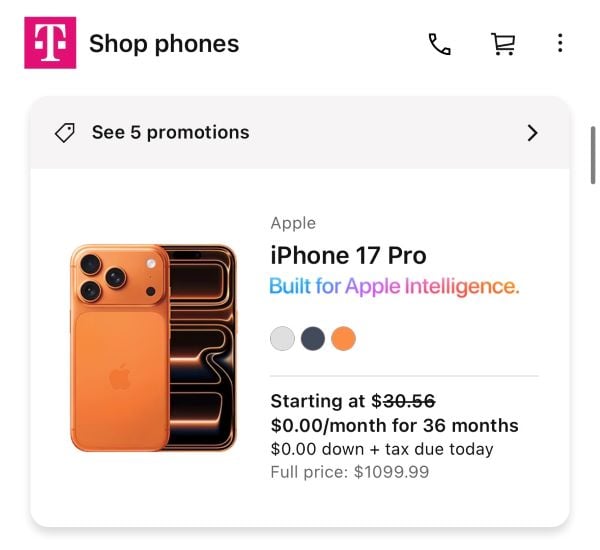
Image: T-Mobile
The global memory chip shortage—nicknamed “RAMageddon” by tech journalists—is officially making your phone plan worse. While the rapidly increasing price of devices like smartphones has been the main focus of most reporting, these hikes are finally starting to impact wireless plans too, meaning all customers may soon be paying more for less, whether they need a new phone or not.
If you’re unfamiliar with the current state of the global memory chip shortage, here’s a quick recap:
- Due to the rise of AI, chipmakers have prioritized manufacturing memory (like DRAM) for AI servers and data centers, pulling the supply away from traditional consumer devices like smartphones, tablets, and laptops.
- The result has been massive price hikes and supply shortages for the remaining chips that are needed for the consumer market.
- In response, companies like Apple, Samsung, and Google have rapidly raised prices of their most popular products, in some cases just months after they were originally released.
Wondering how a hardware crisis impacts a service like wireless plans? It’s all about the device installment plans and extra perks.
T-Mobile announced plan changes last week to its postpaid Experience More and Experience Beyond plans. While the announcement focused on ending upfront device fees for qualifying customers, the changes flying under the radar were T-Mobile extending its Equipment Installment Plans (EIPs) and slashing its early upgrade perks.
T-Mobile used 24-month EIPs with its postpaid plans for over a decade. The new plans are now 36 months long, adding an extra year of payments and bringing T-Mobile in line with the installment plans from AT&T and Verizon.
Forcing customers onto a 36-month plan also meant that T-Mobile had to scrap the upgrade perks on these plans. The Experience Beyond plan originally offered a yearly early upgrade perk. Customers paid off 50% of their device over the first year of the 24-month plan, then T-Mobile covered the rest for their upgrade. Now that it takes 18 months to pay off half the device, the math doesn’t work for the new Experience Beyond 2.0 plan, so it’ll be more difficult and costly for anyone who wants the newest phone every year. The new Experience More 2.0 plan has no early upgrade perk, so customers must wait out the entire three-year period.
Despite T-Mobile trying to spin these new plans as a win for customers, here is what's probably happening: T-Mobile realized that its 24-month installment plans were becoming too expensive with the rising cost of smartphones. As I wrote earlier this year, the era of the $799 smartphone is over, and the entry-level price of base-model phones is closing in on $1,000. Customers simply do not want to pay those higher prices, so this is an easy way for T-Mobile to hide the increased cost.
Longer installment plans make the monthly sticker shock of these expensive devices feel much smaller since the cost is stretched over an extra year. Unfortunately, it also means you’re stuck with the same device and plan for longer too. Plus, by eliminating perks like yearly upgrades, everyone is getting less for their money, whether they actually used the perks or not.
Experts don’t see an end to the memory crisis coming any time soon. I expect other carriers will soon begin adjusting their plans and device installment terms, and some customers may even abandon carrier installment plans altogether. The rising cost of iPhones is part of why Apple just launched its new official leasing program, Apple Upgrade. It guarantees the newest iPhone every year—essentially replacing the perk T-Mobile just cut—at a much cheaper price than carrier installment payments.
The bad news is that there isn’t much we can do about any of this. Carriers get to set the terms, and while it’s easy to blame them when plans get worse, this particular situation is mostly out of their control.
The good news is that there are things you can do to still save money if you’re thinking of upgrading your phone soon:
- Consider last year’s model: One unexpected development of the memory crisis is that the newest phones aren’t that much better than last year’s. Manufacturers simply can’t afford to build better specs right now, so a previous generation is cheaper while offering fairly similar hardware.
- Hold onto your phone longer: The average upgrade cycle is three years now. Much of that is due to cost, but part of it is also because it takes around three years for truly new features to come out on most flagship devices. Unless your phone is damaged or you want to move to a premium model, you’re probably not getting much for your money by upgrading every year or two.
- Take advantage of launch deals: If you do want a new phone, you’ll always find the best deals at launch. Carriers and manufacturers want to show major sales when new devices come out, so they offer the most generous trade-in deals and financing options during that time.
Going forward, you should also keep an eye on your carrier’s perks, prices, and device installment plans. While T-Mobile was the first to make these kinds of plan changes in the wake of rising smartphone prices, it probably won’t be the last. Switching to another carrier might be the best option when those changes officially come.
More from WhistleOut on finding cheaper smartphones:
- Upgrade To Last Year's iPhone: Here’s why you should consider last year’s iPhone 16 when it’s time for an upgrade.
- Best iPhone Deals: We scoured the web and your favorite carriers to find the best deals on top iPhone models like the iPhone 17, iPhone 17 Pro, and iPhone Air.
- Best Samsung Galaxy Deals: Want a new Samsung? We’ve got all the details on finding a cheap Galaxy S26 or the brand-new Galaxy Z Fold 8.
- Best Pixel Deals: We’ve got ways for you to save whether you’re looking for a new Pixel 11 or the premium Pixel 11 Pro Fold.
Hi there! I'm Max, and I'm a wireless industry expert. What does that mean? For one thing, I get paid to play on my iPhone. But more than that, it means I've spent years reviewing carriers, testing smartphone hardware, and reporting on the news that impacts your phone bill.
Smartphones and wireless plans are some of the most important pieces of technology in most people's lives, but you probably don't think about them until your plan is too expensive or it's time to upgrade to the newest phone. Unfortunately, that means you miss a lot of interesting and important stuff that can affect your life and wallet. The WhistleBlower is our way of cutting through the noise and flagging the things we think you need to know about.
Max McCaskill
Sr. Staff Writer

Find a better phone plan
Thousands of cell phone plans unpacked. All the facts. No surprises.


.png?w=280&h=280&usm=20&usmrad=0.8&fit=crop "The Best Prepaid Cell Phone Plans of 2026 for Flexible and Affordable Service")