When it comes to wide appeal and top features, I rate the Samsung Galaxy Z Fold7 as the best overall foldable you can buy in 2026. But "best overall" and "best for you" aren't the same thing. For this guide, I've broken down each device by what people actually shop for—budget, pocketability, camera, and battery—so you can skip straight to the one that matters to you.
I've used a foldable as my daily phone for two and a half years, and in that time, the category has gone from a risky novelty to something I recommend to many people. The downsides that early adopters had to worry about are disappearing:
- The hinges are rated for years of folding.
- The screens sit flatter.
- You have real choices at different prices and from different brands.
Now, with the larger landscape of foldables, let's dive into which pick best fits how you actually use your phone.
What's the difference between a foldable and a flip phone?
The short version: A flip phone (or clamshell) typically folds a normal-sized phone in half, making it more easily fit in your pocket. And a book-style fold opens outward like a book to reveal a large, tablet-sized inner display.
- Book-style folds: Galaxy Z Fold7, Google Pixel 10 Pro Fold, Motorola Razr Fold. They open to a roughly 8-inch inner screen for multitasking, reading, and video streaming. I own this kind of device—they're bigger, heavier, and pricier.
- Clamshell flips: Galaxy Z Flip7, Motorola Razr lineup. They allow a full smartphone to fold down to about half its height—more compact, more affordable, more about style.
Both get called "foldables," but the real question is whether you're folding to get more screen (book fold) or less bulk (clamshell flip).
Figuring out which style foldable you want narrows the field fast. If you want a phone that doubles as a mini tablet, you want a book-style fold. If you just want a flagship device that disappears into a small pocket, you want a flip-style fold.
Best foldable phones: Tech specs compared
| Phone | Best for | Type | Main/inner display | Cover display | Chipset | Rear cameras | Battery | Starting price |
|---|---|---|---|---|---|---|---|---|
| Samsung Galaxy Z Fold7 | Overall pick | Book fold | 8.0" | 6.5" | Snapdragon 8 Elite | 200MP + 12MP + 10MP | 4,400 mAh | $1,999 |
| Motorola Razr (2025) | Budget | Flip | 6.9" | 3.6" | Dimensity 7400X | 50MP + 13MP | 4,500 mAh | $699 |
| Samsung Galaxy Z Flip7 | Compact size | Flip | 6.9" | 4.1" | Exynos 2500 | 50MP + 12MP | 4,300 mAh | $1,099 |
| Google Pixel 10 Pro Fold | Camera | Book fold | 8.0" | 6.4" | Tensor G5 | 48MP + 10.5MP + 10.8MP | 5,015 mAh | $1,799 |
| Motorola Razr Ultra (2025) | Battery life | Flip | 7.0" | 4.0" | Snapdragon 8 Elite | 50MP + 50MP | 4,700 mAh | $1,299 |
Best overall foldable phone
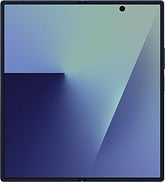
Samsung | Z Fold7 | $1,999—Best overall foldable phone
Best for: Power users and multitaskers who want a phone that can serve as a small tablet.
The Samsung Galaxy Z Fold7 is the most complete foldable on the market right now, and it's the one I'd point most people toward if they just want the best. I've used a Galaxy Z Fold5 as my daily phone for two and a half years, and the upgrade I care about most is the cover screen: At 6.5 inches, the Fold7's is finally wide enough to use like a normal phone. I still make typos every time I type more than a few words on my Galaxy Z Fold5's narrow outer screen, and Samsung's redesign is built to fix that.
Open it up, and the 8.0-inch inner display makes running two apps side by side actually work the way Samsung intended, and the Snapdragon 8 Elite processor is built to handle anything you throw at it, from heavy mobile games to years of software updates. The new 200MP main camera also means you're no longer trading photo quality for the folding screen.
The catch, as always, is price. At $1,999, it's the most expensive phone on this list—roughly double the price of a high-end non-folding phone.
- Pros: Finally-large-enough 6.5" cover screen, class-leading 200MP camera, top-tier Snapdragon 8 Elite processor, multitasking that actually works
- Cons: The most expensive pick here, heavier than a standard cell phone
How I picked the best foldable phones
- Price & value: I weighed each phone's sticker price against what you actually get, because nobody should pay premium prices for a party trick.
- Processing power: I looked at whether the chipset can keep up with multitasking, gaming, and years of software updates.
- Battery life: A larger screen requires more power, so I focused on phones that comfortably last a full day.
- Display & durability: It folds, but will it hold up? I prioritized bright, durable screens and hinges built to last.
Best budget foldable phone
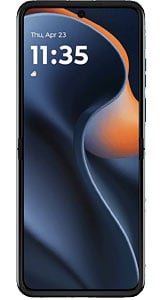
Motorola | Razr (2025) | $699—Best budget foldable phone
Best for: First-time foldable buyers who want the experience without the flagship price tag.
I get why dropping $1,000-plus on a phone shape you've never lived with feels like a gamble. The Motorola Razr (2025) is the lower-risk way to find out if foldables are for you. At $699, it costs less than most standard flagships, and you still get the satisfying clamshell fold plus a genuinely useful cover screen for notifications, music, and quick replies.
You make some sensible trade-offs for that price. The MediaTek Dimensity 7400X chip is built for everyday use (not heavy gaming), and the dual cameras won't keep up with the Pixel or Galaxy. But the 4,500 mAh battery is generous, the 6.9-inch main screen is bright and smooth, and for browsing, texting, and scrolling, it does everything most people need.
If you're foldable-curious and don't want to risk $2,000 to find out whether you like it, start here.
- Pros: Lowest price of any current foldable, big 4,500 mAh battery, genuinely fun to use
- Cons: Modest chipset, basic cameras, smaller cover screen than the pricier flip phones
Best compact foldable phone
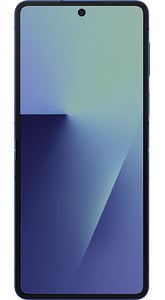
Samsung | Z Flip7 | $1,099—Best compact foldable phone
Best for: Anyone who wants a full-featured phone that shrinks down to fit in a small pocket or bag.
The whole point of a flip is to take a full-sized phone and fold it down to a pocketable square, and the Samsung Galaxy Z Flip7 nails it better than anyone else. The big change this year is the new 4.1-inch edge-to-edge cover screen that stretches almost the full front of the phone. You can run apps, fire off replies, and frame photos without ever opening the phone, which is exactly what a clamshell flip should do best.
Open it, and you get a standard 6.9-inch screen, a 4,300 mAh battery (the biggest ever in a Galaxy flip), and a solid 50MP main camera. Folding it partway also lets you prop it up hands-free for selfies and video calls—a trick a regular slab phone could only dream of.
It's cheaper than the book-style folds, but at $1,099, it still costs more than a comparable non-folding device. You're paying a premium for the compact shape and style, which, for someone just branching into the world of foldables, can make the price hard to justify.
- Pros: Big new 4.1" cover screen, genuinely pocketable, hands-free camera modes, large battery for a flip phone
- Cons: Pricier than comparable non-folding phones, built to shrink your phone rather than grow your screen
Best foldable phone for camera
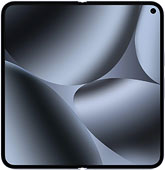
Google | Pixel 10 Pro Fold | $1,799—Best foldable phone for camera
Best for: Photographers and content creators who refuse to give up camera quality to go foldable.
For a long time, going foldable meant settling for a worse camera. The Google Pixel 10 Pro Fold is the one that doesn't ask you to. Google's computational photography is still the gold standard for point-and-shoot results. The triple rear setup (48MP main, 10.5MP ultrawide, 10.8MP 5x telephoto) delivers the most consistently true-to-life shots in the category, with Pro controls when you want them.
And to make it even better, the fold form factor makes the cameras more useful, not less. Because you can prop the phone open or use the 6.4-inch cover screen as a viewfinder, you can shoot selfies and group photos with the quality rear cameras instead of a weaker front one. Pair that with the Tensor G5's AI editing and a huge 5,015 mAh battery, and it's the most capable creative tool on this list.
If raw resolution is your thing, the Galaxy Z Fold7's 200MP sensor pulls more detail on paper. But for photos that look great straight out of the phone with zero fuss, the Pixel is my pick.
- Pros: Best-in-class computational photography, versatile triple rear cameras, rear-camera selfies, the biggest battery of any foldable
- Cons: Lower headline megapixels than the Z Fold7, high price
Best foldable
phone for battery life
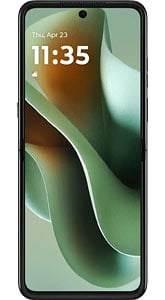
Motorola | Razr Ultra (2025) | $1,299—Best foldable phone for battery life
Best for: Heavy users and travelers who need a foldable that lasts long and charges fast.
Battery is a fair worry with foldables, and the Motorola Razr Ultra (2025) is the one for heavy users. Its 4,700 mAh battery is one of the largest in any flip and routinely pushes past a full day. And when it does run down, 68W TurboPower charging—the fastest of any foldable—takes it from empty to full in about 40 minutes, or gives you enough charge to get through a full day in just 8 minutes.
It's no slouch anywhere else, either. The Razr Ultra is the first flip to run Qualcomm's flagship Snapdragon 8 Elite, pairs a 7.0-inch 165Hz inner display with a roomy 4.0-inch cover screen, and carries a 50MP main camera plus a 50MP ultrawide, with 8K video.
And while the book-style Pixel 10 Pro Fold technically packs a slightly larger 5,015 mAh cell, no other foldable combines big-battery endurance with this fast charging.
- Pros: Class-leading 68W fast charging, large 4,700 mAh battery, flagship Snapdragon 8 Elite processor, 165Hz display
- Cons: Pricey for a flip, only two rear cameras
Foldable phones pros and cons
There's a lot of variety in foldables, but a handful of pros and cons apply to almost all of them. For the full, lived-in version, here's everything I learned owning one.
The good: Modern foldables are portable, pack the same flagship guts as any other phone, and—if you go book-style—hand you a genuinely tablet-sized screen for multitasking and reading.
The not-so-good: They can be less durable than a slab phone, and they're still some of the priciest devices out there.
To flip or not to flip? Pros and cons
- Portability
- Top features
- Durability
- Price
Pro: Portability
A book-style fold packs an 8-inch screen into something that closes down to the size of a normal phone, while a flip shrinks a full flagship into a pocketable square. Either way, you get more phone to use in less space.
Pro: Top features
Today's foldables run the same top chipsets, cameras, and software as the best nonfolding phones from Samsung, Google, and Motorola. You're not giving up power to get the folding screen.
Con: Durability
Foldables are tougher than they used to be. Samsung rates its current hinges for around 200,000 folds, roughly five years at 100 folds a day—but the flexible inner display still needs more care than a slab phone's glass.
Con: Price
Cost is still the number-one reason people hesitate to switch to a foldable. Book-style folds cost roughly twice as much as a new regular cell phone, and even flips command a premium over comparable slab phones. Carrier deals and trade-ins can close that gap a lot, but be prepared to pay much more than you would for a traditional slab phone.
Pst... If you're looking for some new apps that work on foldables, check out to see what's worth downloading.
Foldable phone plans
Most foldables work on any network, but you can often get one at a lower price through a carrier.
The Big Three
AT&T, Verizon, and T-Mobile (the three largest carriers in the U.S.) give you the best shot at a discounted foldable. They run phone deals on top devices—foldables included—and let you spread the cost over monthly installments. Just know that the biggest discounts usually lock you into a two- or three-year financing commitment.
|
Verizon

Unlimited Ultimate
$95.00/mo
+ Taxes & Fees. Price includes AutoPay & Paperless discount.
+ $40 Upfront
|
|
Verizon
Unlimited Welcome
$65.00/mo
+ Taxes & Fees. Price includes AutoPay & Paperless discount.
+ $40 Upfront
|
|
Verizon
Unlimited Plus
$80.00/mo
+ Taxes & Fees. Price includes AutoPay & Paperless discount.
+ $40 Upfront
|
|
T-Mobile

Experience Beyond 2.0
$100.00/mo
with Auto-Pay + Taxes and fees
|
|
T-Mobile
Go5G Plus
$90.00/mo
with Auto-Pay - Taxes & Fees included
|
|
T-Mobile
Essentials Saver 2.0
$50.00/mo
with Auto-Pay - Taxes & Fees NOT included
|
|
T-Mobile
Essentials 2.0
$60.00/mo
with Auto-Pay - Taxes & Fees NOT included
|
|
T-Mobile
Experience More 2.0
$85.00/mo
with Auto-Pay + Taxes and fees
|
|
T-Mobile
Go5G Next
$100.00/mo
with Auto-Pay - Taxes & Fees included
|
|
Verizon
Simplicity Plan
$30.00/mo
+ Taxes & Fees. Price includes AutoPay & Bring a Number discount
|
Foldable phones from MVNOs
Plans from the Big Three are popular but expensive. MVNOs (mobile virtual network operators) run on those same networks for a fraction of the cost. For example, you can get unlimited data on T-Mobile's 5G network for as low as $15/month with Mint Mobile, or unlimited on Verizon's network for $25/month with Visible. The trade-off: Most MVNOs don't offer device installment plans, so you'll usually need to buy the foldable outright.
|
Metro by T-Mobile (MetroPCS)

$60 Unlimited Plan
$60.00/mo
with AutoPay. Taxes and regulatory fees included.
|
|
Metro by T-Mobile (MetroPCS)
$40 Period Unlimited Plan
$40.00/mo
Taxes and regulatory fees included.
|
|
Metro by T-Mobile (MetroPCS)
$50 Unlimited Plan
$50.00/mo
with AutoPay. Taxes and regulatory fees included.
|
|
Metro by T-Mobile (MetroPCS)
Unlimited 6-Month Plan (BYOD)
$20.00/mo
Upfront payment of $120 for 6 months <br>(equivalent to $20/month)<br>Taxes and regulatory fees included.
|
|
Metro by T-Mobile (MetroPCS)
$25 Unlimited Plan (BYOD) | Online
$25.00/mo
with AutoPay; $30 for the first month.
|
|
Metro by T-Mobile (MetroPCS)
$30 Unlimited Plan (BYOD) | Online
$30.00/mo
|
|
Metro by T-Mobile (MetroPCS)
$35 Unlimited Plan (BYOD) | Online
$35.00/mo
with AutoPay
|
Foldable phones: FAQ
What are the biggest problems with foldable phones?
App optimization is the biggest problem with foldable phones. Since most apps still aren't designed for a large inner display, you'll regularly run into stretched or letterboxed layouts.
What is the difference between a flip phone and a fold phone?
A flip phone folds vertically in half, making a full-sized smartphone more compact when it's closed, meaning you don't get any extra screen space. A fold phone opens horizontally like a book, revealing a large inner display that's closer to tablet size.
Is the crease on a foldable phone really noticeable?
In normal lighting at a standard viewing angle, most people stop noticing it pretty quickly. It becomes more visible in direct sunlight or on a light-colored background. It's gotten noticeably better with each generation but hasn't gone away completely. However, Samsung has said that the new Galaxy Z Fold8, which comes out later this year, will be creaseless, so this may not be an issue for much longer.
Should I wait for the iPhone Fold before buying a foldable?
If you're on an iPhone and don't want to switch to Android, it makes sense to wait since the iPhone Fold is expected later in 2026. If you're already on Android, the current lineup is solid enough that waiting isn't necessary. Either way, the iPhone Fold's entry into the market could improve app optimization across the category, benefiting everyone with a foldable phone.
What is the average lifespan of a foldable phone?
Samsung rates its current hinges for 200,000 folds, which works out to roughly five years at 100 folds per day. Is a foldable phone durable? In my experience, yes. Two and a half years in, I have noticed no real degradation in quality, and the hinge feels just as strong as it did when I first got it.
Scott Houghton
Jr. Staff Writer

Find a better phone plan
Thousands of cell phone plans unpacked. All the facts. No surprises.


.png?w=280&h=280&usm=20&usmrad=0.8&fit=crop "Best Cell Phone Deals for August 2026: Get the New iPhone 17 for Free")
.jpg?w=280&h=280&usm=20&usmrad=0.8&fit=crop "Best Back-to-School Phone Deals 2026: Free iPhones, Tablets, Watches, and More")